Featured answer: The best diet during pregnancy is a balanced, nutrient-dense pattern that includes fruits, vegetables, whole grains, lean protein, dairy or fortified alternatives, healthy fats, enough water and special attention to folic acid, iron, calcium and protein.
Why diet during pregnancy matters
Pregnancy changes the body in ways that make food more important than ever. A growing baby depends on the mother not only for calories, but also for the building blocks of the brain, bones, blood, muscles and immune system. At the same time, the mother’s body is expanding blood volume, adapting hormones, supporting the placenta and preparing for childbirth and recovery. That is why diet during pregnancy is not about “eating for two” in a careless sense. It is about eating with more purpose.
Mayo Clinic says the basic principles of healthy eating remain the same during pregnancy: plenty of fruits, vegetables, whole grains, lean protein and healthy fats, with extra attention to certain nutrients. Johns Hopkins adds that the additional calories needed in pregnancy should come from a balanced diet rather than sweets and processed foods. Together, these points create an important message for patients: eat better, not simply more.
Reference note: Mayo Clinic emphasizes fruits, vegetables, whole grains, lean protein and healthy fats, while Johns Hopkins says extra calories should come from a balanced diet of protein, fruits, vegetables and whole grains.
What to eat during pregnancy
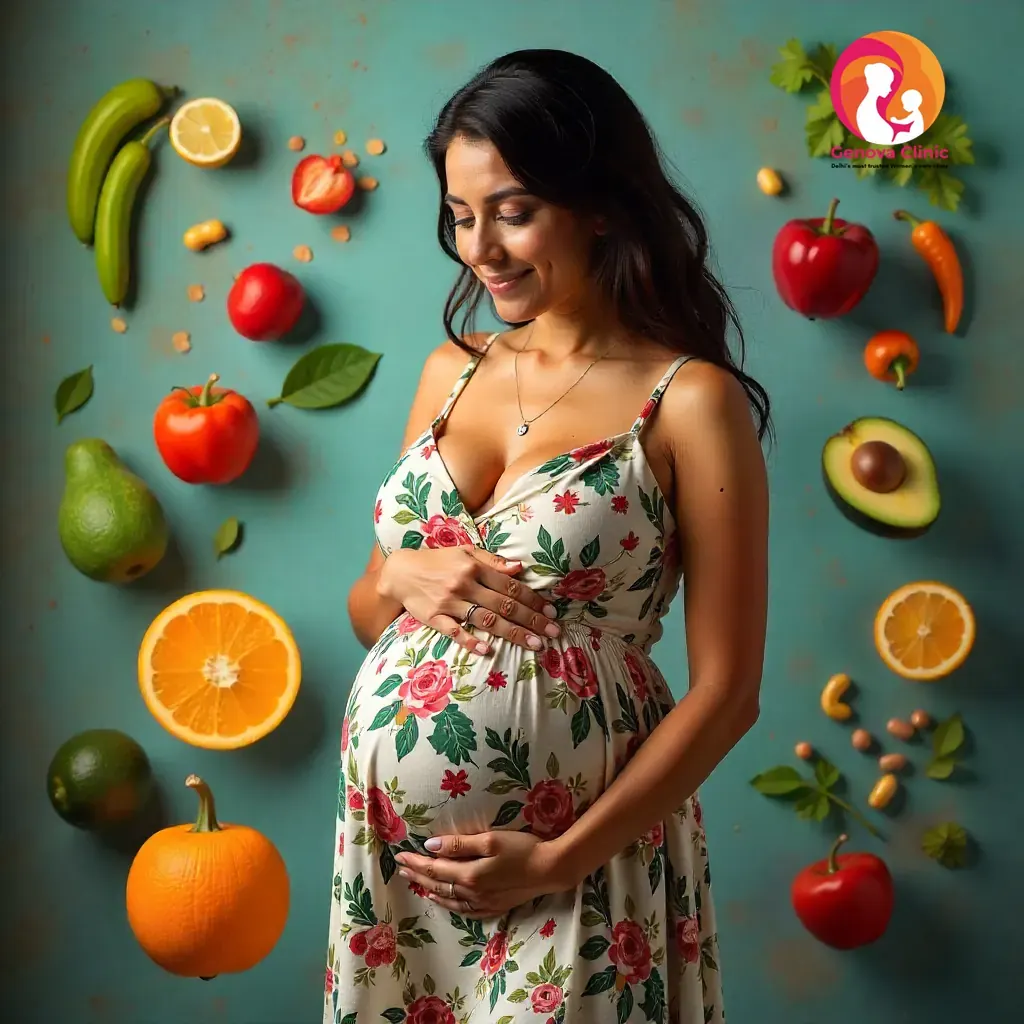
What to eat in pregnancy should be simple enough to follow at home. A healthy pregnancy diet usually includes a mix of vegetables, fruits, whole grains, pulses, dairy or fortified substitutes, eggs or lean meat if taken, nuts, seeds and healthy oils. The ideal plate is not expensive or exotic. It is balanced, clean, regular and diverse.
- Vegetables: spinach, carrots, pumpkin, tomatoes, sweet potatoes, beans and other seasonal vegetables.
- Fruits: oranges, bananas, guava, apples, berries, mango in moderation and other fresh fruits that are well washed.
- Whole grains: oats, dalia, roti, brown rice, millets and other fibre-rich choices.
- Protein foods: dal, chana, rajma, paneer, curd, eggs, fish low in mercury and lean meats if part of the mother’s regular diet.
- Healthy fats: nuts, seeds, peanut butter, avocado where available and moderate use of healthy oils.
Johns Hopkins recommends protein, fruits, vegetables and whole grains as the basis of pregnancy eating, while Cleveland Clinic highlights dark leafy greens, fortified cereal, milk or non-dairy alternatives and low-mercury fish as useful additions. These are not trend foods. They are practical sources of the nutrients pregnancy needs most.
Reference note: Johns Hopkins and Cleveland Clinic both recommend balanced meals built around vegetables, fruit, whole grains, protein and calcium-rich foods.
Essential nutrients in a pregnancy diet
Every healthy pregnancy diet should pay attention to a few nutrients that matter especially during these months. Mayo Clinic highlights folate or folic acid, calcium and other core nutrients as top priorities in pregnancy nutrition. These nutrients do not work in isolation, yet understanding them helps women build smarter meals.
Folic acid and folate
Mayo Clinic recommends 400 micrograms of folate or folic acid daily before pregnancy and 600 to 1,000 micrograms during pregnancy. Folate helps reduce the risk of neural tube defects early in fetal development. Good sources include leafy greens, citrus fruit, lentils and fortified cereals, but supplements are often still needed because food alone may not be enough every day.
Iron
Iron supports the increase in maternal blood volume and helps prevent anemia. Low iron can worsen fatigue, reduce reserve for delivery and affect oxygen transport. Iron-rich foods include lentils, beans, spinach, fortified cereals, meat and eggs, though some women will also need tablets prescribed by their doctor.
Calcium
Calcium supports fetal bone development and protects the mother’s own stores. Mayo Clinic lists milk, yogurt, cheese, calcium-fortified juice and salmon with bones among useful sources. Women who avoid dairy need a planned substitute strategy rather than guesswork.
Protein
Protein matters throughout pregnancy because the baby, placenta and maternal tissues are all growing. Mayo Clinic materials note about 71 grams of protein daily in the later trimesters, and Cleveland Clinic also emphasizes additional protein for healthy fetal growth and development. Protein should be spread across the day rather than left to only one heavy meal.
Fluids and fibre
Water supports circulation, digestion, amniotic fluid balance and temperature control. Fibre from fruits, vegetables, oats, seeds and whole grains helps reduce constipation, which is common in pregnancy. A woman who eats well but drinks very little may still feel bloated, tired and uncomfortable.
Reference note: Mayo Clinic highlights folate, calcium and other key nutrients; Mayo Clinic Press notes about 71 grams of protein in later pregnancy; Cleveland Clinic supports protein-rich foods and calcium-rich choices.
Foods to avoid during pregnancy
Foods to avoid during pregnancy matter because food safety is as important as food quality. Mayo Clinic advises avoiding undercooked meat, undercooked poultry, undercooked eggs and unsafe processed meats that are not heated properly. Cleveland Clinic also warns about alcohol, high-mercury fish and foods linked with listeria risk.
- Alcohol in all forms.
- Raw or undercooked meat, fish, shellfish and eggs.
- High-mercury fish.
- Unpasteurized milk, cheese or juices.
- Refrigerated ready-to-eat meats unless heated thoroughly.
- Street foods that are stale, poorly stored or visibly unhygienic.
Many women focus only on “healthy foods” and forget that a contaminated food can create a serious problem. During pregnancy, infection prevention belongs inside the diet plan itself. Food should be fresh, well cooked, hygienically prepared and safely stored.
Reference note: Mayo Clinic specifically warns against undercooked meat, poultry and eggs, while Cleveland Clinic warns against alcohol, high-mercury fish and listeria-associated foods.
How many extra calories are needed?
One of the most common questions in pregnancy nutrition is whether a woman truly needs to eat for two. Johns Hopkins states that about 300 extra calories a day are needed in pregnancy, and these calories should come from balanced foods rather than sweets and fats. This matters because overeating poor-quality food can increase unhealthy weight gain without meeting the baby’s nutritional needs.
The more useful rule is this: choose nutrient density first. One bowl of curd with fruit and seeds, a dal-and-roti meal with vegetables, or an egg with whole-grain toast offers more value than biscuits, sweet drinks or fried snacks. Quantity matters, but quality matters more.
Reference note: Johns Hopkins advises roughly 300 extra calories per day from balanced foods, not excess sweets or low-quality fats.
Trimester-wise diet planning
First trimester
The first trimester often brings nausea, aversion to smells and reduced appetite. Small, frequent meals may help more than large meals. Dry snacks, curd, fruit, toast, poha, idli or simple home foods are often tolerated better than heavy oily foods. Folic acid is especially important in this phase.
Second trimester
Appetite often improves in the second trimester. This is a good time to strengthen protein intake, iron intake and calcium intake while building a stable meal schedule. A woman should aim for regular breakfast, lunch, dinner and one to two useful snacks instead of random grazing.
Third trimester
In the third trimester, the baby grows quickly and the mother may feel full sooner because the uterus occupies more space. Smaller meals with good protein, hydration and fibre often feel more comfortable. Late-night acidity may improve when dinner is lighter and earlier.
Pregnancy diet plan for Indian families
A pregnancy food chart should fit daily life. It should respect vegetarian, non-vegetarian, religious and cultural preferences without losing nutritional value. A practical Indian pregnancy diet plan can look like this:
Vegetable dal chilla with curd, or oats with milk and nuts, or eggs with whole-grain toast and fruit.
Fruit, coconut water if appropriate, or buttermilk with roasted chana.
Roti or rice with dal, one seasonal vegetable, salad, curd and paneer, fish or chicken depending on food preference.
Sprouts, soup, fruit with nuts, or peanut chikki in moderation.
Lighter version of lunch with more vegetables and steady protein.
Milk or a small protein-rich snack if advised, especially when nausea or acidity is not a concern.
This kind of plan supports nutrition without making the mother feel trapped in a rigid chart. The right plan is the one she can actually follow consistently.
Diet during pregnancy with common concerns
Nausea and vomiting
Plain, dry, low-oil foods often feel easier in early pregnancy. Long gaps without food can worsen nausea, so frequent small meals may help. Strong smells and greasy foods are common triggers.
Constipation
Fibre and water matter more than quick fixes. Fruit, vegetables, oats, seeds, whole grains and enough fluids usually help. Iron tablets can worsen constipation in some women, so the full plan should be discussed with the doctor.
Gestational diabetes
A woman with gestational diabetes does not need starvation. She needs carbohydrate control, balanced meals, protein with each meal and careful spacing of snacks. Refined sugars, juices and oversized carb portions should be reduced, but steady nutrition remains essential for the baby.
High blood pressure
Women with high BP benefit from fresh home-cooked food, moderation in salt and lower intake of packaged, highly processed snacks. Regular monitoring and medical supervision remain central because diet alone cannot manage every case.
Can a good pregnancy diet reduce complications?
A good diet cannot prevent every complication, yet it can reduce avoidable nutritional stress on the body. Better food choices support blood building, bone health, digestion, immunity and controlled weight gain. They can also improve energy, reduce constipation and support better glucose stability. That is why pregnancy nutrition should be seen as medical support, not a lifestyle luxury.
Johns Hopkins notes that a healthy, well-balanced diet may help reduce symptoms such as nausea and constipation. That is a useful reminder that diet improves not only long-term outcomes, but also daily comfort and adherence during pregnancy.
Reference note: Johns Hopkins notes that a healthy, well-balanced diet can help reduce symptoms such as nausea and constipation.
When to ask your gynaecologist for a personalized diet plan
A personalized plan becomes especially important when the mother is underweight, overweight, anemic, diabetic, hypertensive, vegetarian with low protein intake, carrying twins or unable to tolerate food well. A good gynaecologist does more than prescribe supplements. She helps connect symptoms, reports, trimester changes and practical eating habits into a safe routine that the family can sustain.
For Delhi families, a useful pregnancy diet plan should fit work schedules, commuting, home cooking patterns and realistic access to fresh food. The best plan is evidence-based, emotionally manageable and easy to repeat day after day.