Pregnancy Care Month by Month — Complete Guide, South Delhi
Welcome to the most transformative journey of your life. Bringing a child into the world requires unparalleled care, deep empathy, and absolute medical excellence. At Genova Clinic, South Delhi's premier destination for women's health, we understand the anxieties and joys that accompany pregnancy. Led by Delhi's top gold-medalist gynecologist, we provide world-class, bespoke prenatal care tailored to your unique needs.
To help you navigate this beautiful process, we have mapped out exactly what happens inside your body as your baby grows.
The First Trimester: The Foundation of Life
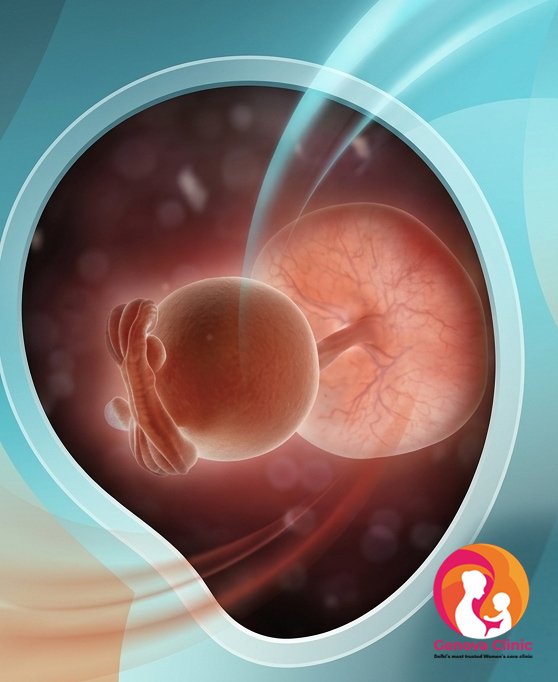
Month 1 (Weeks 1 to 4): The Seed is Planted
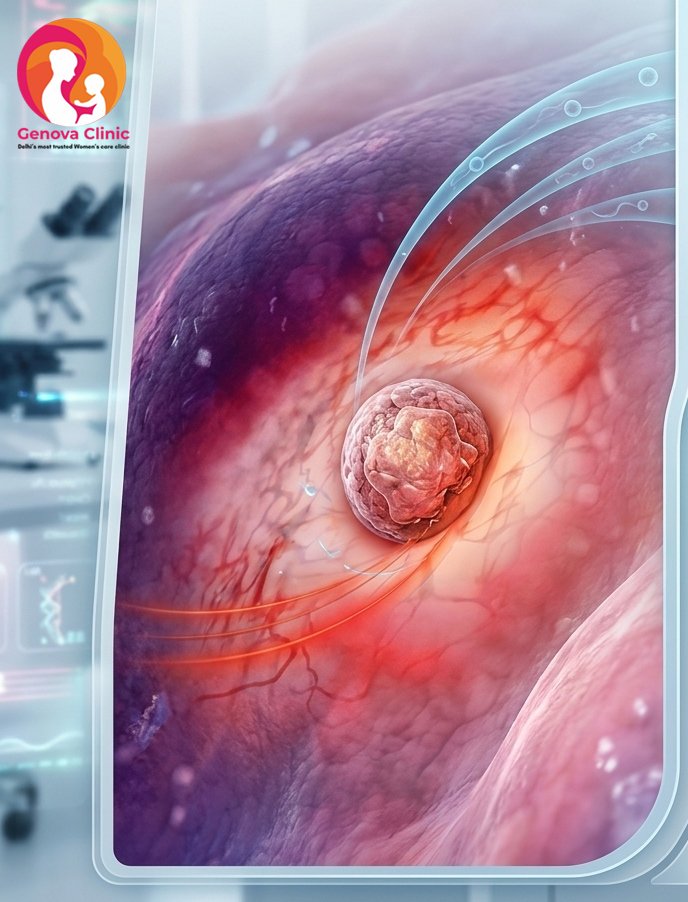
Your journey begins. During these early weeks, the fertilized egg rapidly divides and travels down the fallopian tube to implant itself securely in your uterine lining.
- Fetal Development: The amniotic sac forms, creating a safe, cushioned environment. The placenta also begins to develop, which will transfer essential nutrients from you to your baby.
- Your Body: You might not feel pregnant yet, but you may experience light spotting or breast tenderness.
- Symptoms Missed periods, Breast tenderness, Light spotting
- Precautions Avoid alcohol & smoking, Start folic acid
- Test Pregnancy test (urine/blood)
- Question What are early pregnancy symptoms?
Answer Symptoms of Early pregnancy are Missed periods, Breast tenderness, Light spotting.
- Question Is spotting normal in early pregnancy?
Answer Yes—spotting can be normal in early pregnancy, especially in the first trimester. But it depends on the pattern, amount, and associated symptoms.About 20–30% of pregnant women experience some spotting early on.
- Question How to confirm pregnancy at home? When to visit a gynecologist?
Answer Use a home pregnancy test kit..Test after missed period (best after 5-7 days delay)
Use first morning urine for best accuracy. Testing Early will give false negative
Month 2 (Weeks 5 to 8): The Heartbeat Begins
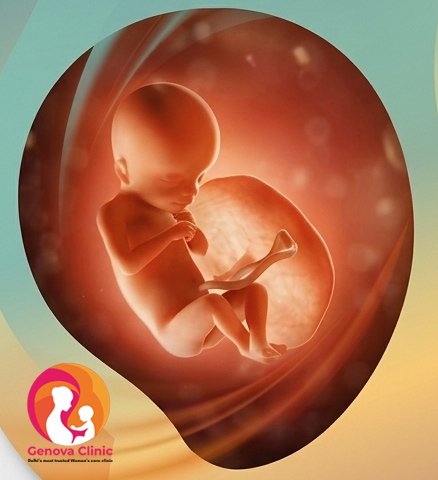
This month marks incredible milestones. The neural tube, which eventually becomes the brain and spinal cord, forms completely.
- Fetal Development: We can now detect a steady, rhythmic heartbeat via ultrasound. Tiny buds appear that will soon grow into arms and legs.
- Your Body: Morning sickness often begins here. We recommend eating small, frequent meals to manage nausea.
- Symptoms Morning sickness, Fatigue
- Precautions Eat small frequent meals
- Test First ultrasound
- Question How to control nausea?
Answer morning sickness or nausea is common in 1st trimester. Small meals every 2–3 hours (empty stomach worsens nausea). Dry foods first thing in the morning (toast, crackers, biscuits).. Stay hydrated , it helps in easing it.
- Question Why does morning sickness happen?
Answer Its owing to the increased levels of Human chorionic gonadotropin (hCG) Higher and faster it rises, the more likely you feel nausea hence this symptoms peak around 6–12 weeks..
"According to the Mayo Clinic, securing early and consistent prenatal care during these crucial first eight weeks drastically reduces the risk of complications. Taking daily prenatal vitamins containing folic acid is essential to support early neural tube development and ensure the healthiest start for your baby."
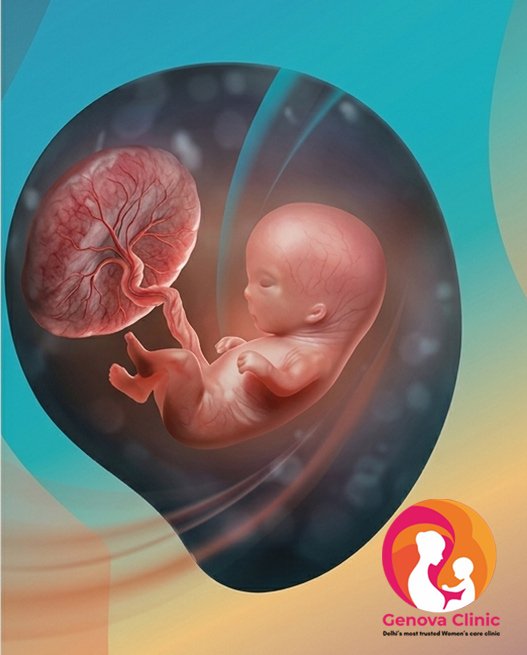
Month 3 (Weeks 9 to 13): From Embryo to Fetus
Your baby graduates from an embryo to a fetus! The critical development of the organs finishes by the end of this month.
- Fetal Development: Your baby's reproductive organs begin to develop, and their tiny fingers and toes lose their webbing.
- Your Body: You will likely notice your energy returning as you transition into the second trimester.
- Symptoms Reduced nausea
- Precautions Continue vitamins
- Test NT scan
- Question Is first trimester risky?
Answer first trimester (0-12 weeks) is considered the most sensitive phase, where It just means extra care. it’s more sensitive because higher chance of natural miscarriage owing to chromosomal issues. Most pregnancies progress normally Once heartbeat is seen on ultrasound, risk drops significantly.
- Question Which tests are done in 3rd month?
Answer 1.NT Scan (Ultrasound) Helps screen for genetic conditions like Down Syndrome.
2.Double Marker Test Assesses risk of chromosomal abnormalities followed with Normal Blood tests
The Second Trimester: The Golden Period
Month 4 (Weeks 14 to 17): Rapid Growth
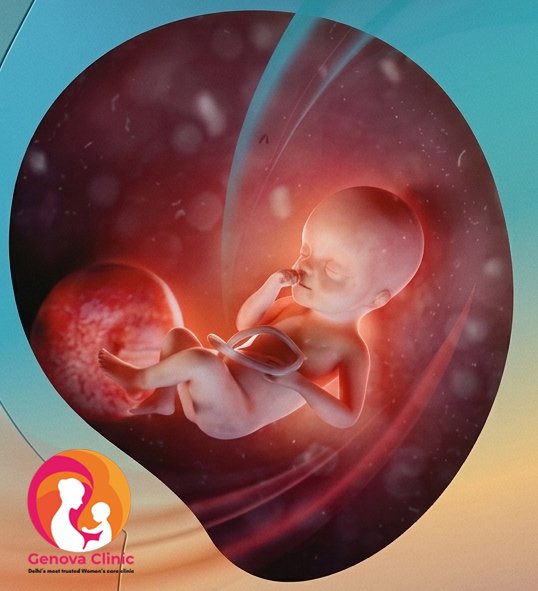
You enter the "honeymoon phase" of pregnancy. Your baby grows rapidly, and their facial features become beautifully defined.
- Fetal Development: The nervous system starts functioning. Your baby can now make facial expressions, and their skeleton begins to harden from cartilage to bone.
- Symptoms Energy increases
- Precautions Light exercise
- Tests Routine checkups
- Question Can I travel during pregnancy?
Answer It's best not to travel during pregnancy. However if you have to travel talk your gynecologist.
- Question Is second trimester safe?
Answer Yes—the second trimester (14-28 weeks) is actually the safest time to travel during pregnancy. But you should consult your gynaecologist before travelling.
Month 5 (Weeks 18 to 22): The First Flutters
You will experience one of pregnancy's most magical moments: quickening. You will feel your baby move for the very first time.
- Fetal Development: A fine hair called lanugo covers your baby’s shoulders and back to protect them. Their hearing develops; they can hear your heartbeat and your voice.
- Symptoms Baby movements begin
- Precautions Balanced diet
- Tests Anomaly scan
- Question When will I feel baby movement?
AnswerUsually between 18-22 weeks or you may feel it earlier, around 16-18 weeks
- Question What is anomaly scan?
Answer An anomaly scan is a detailed ultrasound done in the second trimester to check if your baby is developing normally.
Month 6 (Weeks 23 to 27): Opening Their Eyes
Your baby starts to interact more with their environment inside the womb.
- Fetal Development: Your baby opens their eyes! They respond to sounds and light. Their lungs begin to produce surfactant, a substance vital for breathing outside the womb.
- Symptoms Back pain
- Precautions Posture care
- Tests Glucose test
- Question What is gestational diabetes?
Answer Gestational diabetes is a type of high blood sugar that develops during pregnancy, usually in the 2nd or 3rd trimester—even in women who never had diabetes before.
- Question When is sugar test done?
Answer Sugar test” in pregnancy is usually done at a specific time—but it can vary slightly based on your risk. Between 24-28 weeks of pregnancy
The Third Trimester: The Home Stretch
Month 7 (Weeks 28 to 31): Plumping Up
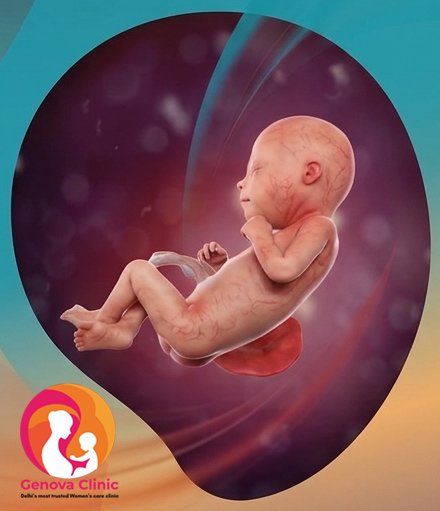
Your baby begins storing body fat, smoothing out their wrinkled skin.
- Fetal Development: The brain undergoes massive growth, and your baby can now process information, track light, and hear distinctly.
- Symptoms Swelling
- Precautions Rest more
- Tests Growth scan
- Question What to expect in 7th month?
Answer The 7th month (around 28–31 weeks) marks the start of the third trimester—your baby is growing , and your body starts preparing for delivery. Breathlessness ,Frequent urination, Sleeping or finding a comfortable position
Month 8 (Weeks 32 to 35): Preparing for Birth
Space gets tight inside your womb! You will feel strong, distinct rolls and kicks.
- Fetal Development: Most of their internal systems are fully developed, though the lungs continue to mature. Your baby likely settles into a head-down position in preparation for birth.
- Symptoms Breathlessness
- Precautions Avoid heavy work
- Tests Routine scans
- Question Is 8th month critical?
Answer The 8th month (32-36 weeks) is often called “sensitive, but not critical for most women if pregnancy is healthy and monitored properly.
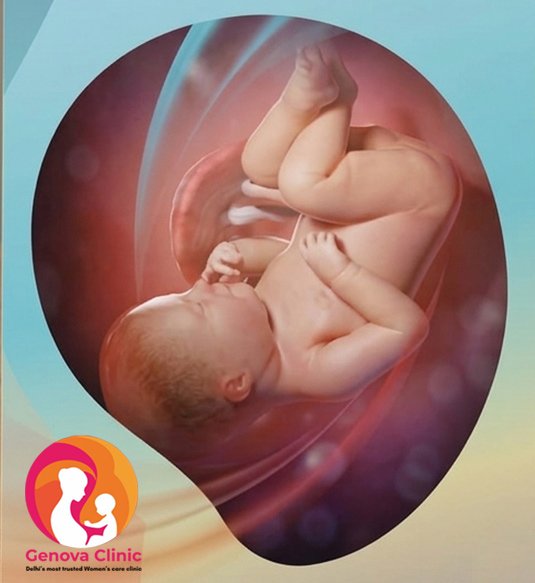
Month 9 (Weeks 36 to 40+): Ready for the World
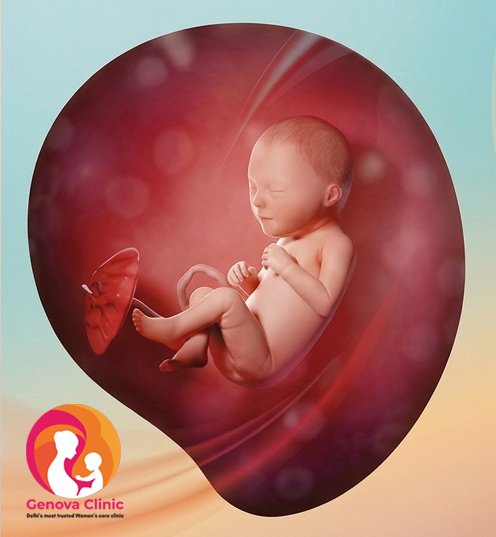
You have reached the finish line. Your baby is fully term and ready to meet you.
- Fetal Development: Your baby's reflexes are coordinated. They can blink, close their eyes, turn their head, and grasp firmly. They shed the lanugo and wait for the signal to begin labor.
- Your Body: You will experience Braxton Hicks contractions as your body rehearses for the main event. Our luxury maternity suite awaits you.
- Symptoms Frequent urination, Contractions
- Precautions Hospital bag ready, Monitor baby movement
- Tests Final scans
- Question What are signs of labor?
When to go to hospital?
Answer Last longer (30-60 seconds)2. Water breaking Sudden gush or continuous trickle of fluid are few symptoms. You should immediately go to Hospital or Call your Gynaecologist.
- Question Is reduced baby movement normal? Normal delivery vs C-section?
Answer Baby is delivered through the birth canal naturally recovery is between 1-2 Weeks. C-section (Cesarean): Baby is delivered through a surgical cut in the abdomen and uterus and recovery is between 4-6 weeks.