PCOS (Polycystic Ovary Syndrome) is a hormonal disorder that can begin in teenage girls, often soon after the first menstrual period. It causes irregular or missed periods, acne, weight gain, and excess facial or body hair due to elevated androgen levels. It is one of the most common hormonal conditions in adolescent girls, and early diagnosis can prevent long-term complications including diabetes and infertility.
When a teenage girl's period skips for three months, her acne refuses to clear despite every remedy, and her weight climbs despite a careful diet — most parents assume it is "just hormones" or stress. Sometimes, they are right. But far too often, these are the earliest, most treatable warning signs of Polycystic Ovary Syndrome (PCOS) — and missing them can set the stage for a lifetime of hormonal struggle.
In India, nearly 1 in 5 young women lives with PCOS, according to a comprehensive study published in JAMA India. The Federation of Obstetric and Gynaecological Societies of India (FOGSI) has repeatedly highlighted adolescent PCOS as a growing public health concern — one that too often goes undiagnosed for years simply because irregular cycles and breakouts are normalised as teenage problems.
Clinical Reference: According to Mayo Clinic, PCOS is one of the most common hormonal endocrine disorders in women of reproductive age, and its symptoms frequently begin during adolescence.
What is PCOS and Why Does It Start in Teenage Girls?
PCOS is not simply a problem with the ovaries — it is a complex hormonal and metabolic disorder rooted in miscommunication between the brain, the ovaries, and the body's insulin-signalling system. At its core, the condition involves an imbalance between three key hormones: insulin, oestrogen, and androgens (male-type hormones like testosterone).
In a healthy menstrual cycle, the brain releases Follicle-Stimulating Hormone (FSH) and Luteinising Hormone (LH) in a steady rhythm. One follicle matures inside the ovary, grows to full size, and releases an egg — ovulation. With PCOS, elevated LH and excess insulin disrupt this sequence. Follicles begin to develop but never fully mature, becoming trapped as small fluid-filled cysts on the ovaries. No egg is released. The period either does not arrive or arrives unpredictably.
🔬 Why Puberty Is a Trigger Window
Puberty naturally involves a temporary increase in insulin resistance — which is why PCOS so often surfaces during or just after the first menstrual period. This is not the girl's fault. It is a biological vulnerability that becomes clinically significant when it persists beyond the first two years after menstruation begins.
Clinical Reference: Johns Hopkins Medicine confirms that PCOS disrupts communication between the brain and ovaries, causing elevated androgen production that halts normal ovulation.
Early Warning Signs of PCOS in Adolescents
The challenge with PCOS in teenagers is that almost every symptom can be — and frequently is — dismissed as normal adolescent change. Here is what to watch for, and why each symptom matters:
Irregular Periods
Cycles shorter than 21 days, longer than 35 days, or absent for 3+ months after puberty are the hallmark of PCOS.
Persistent Acne
Cystic acne along the jawline, chin, and chest that doesn't respond to standard skincare suggests elevated androgens.
Unexplained Weight Gain
Insulin resistance makes the body store fat more easily, especially around the abdomen — even with a controlled diet.
Excess Hair Growth
Dark hair on the upper lip, chin, chest, or stomach (hirsutism) results from elevated testosterone levels.
Hair Thinning
Thinning at the crown or temples, similar to male-pattern hair loss, can occur due to excess DHT.
Dark Skin Patches
Acanthosis nigricans — velvety dark patches at the neck, armpits or groin — signals significant insulin resistance.
It is important to understand that PCOS does not require all these symptoms to be present simultaneously. A teenager with only irregular periods and acne may still have the condition. Equally, a slim, athletic girl with no weight concerns can have PCOS — what clinicians call "lean PCOS."
Clinical Reference: Cleveland Clinic reports that excess androgens — not body weight — are the primary drivers of PCOS symptoms in adolescents, which is why lean PCOS is widely underdiagnosed.
What Happens Inside the Body: Normal Cycle vs PCOS
The Emotional Toll Nobody Talks About
For a 15-year-old already navigating academic pressure, social comparison, and self-identity, PCOS adds a uniquely cruel layer. The visible symptoms — unwanted facial hair, acne, weight gain — strike at confidence and body image during the years when peer perception feels most critical.
Studies consistently show higher rates of anxiety and depression among adolescents with PCOS compared to their peers. What many teenagers experience as "I just feel insecure about how I look" is, in fact, a physiological consequence of chronically elevated androgens and disrupted cortisol rhythms. School stress, in turn, worsens the hormonal imbalance — creating a feedback loop that requires both clinical and emotional support to break.
Parents play a crucial role here. Dismissing a daughter's concerns about acne or missed periods as vanity or overreaction delays the diagnosis by an average of two years in India. Taking these concerns seriously and seeking medical evaluation early is genuinely protective.
How PCOS Is Diagnosed in Teenage Girls
Diagnosing PCOS in adolescents requires clinical judgment because normal puberty and early PCOS share many features. Internationally, the Rotterdam Criteria — which requires at least two of three features (irregular periods, clinical or biochemical signs of excess androgens, and polycystic ovarian morphology) — is used as the diagnostic framework, adapted carefully for adolescents.
| Diagnostic Step | What It Checks |
|---|---|
| Menstrual History | Cycle length, frequency, duration since first period |
| Physical Examination | Acne pattern, hair growth, skin changes, BMI |
| Hormone Profile | LH, FSH, testosterone, DHEAS, TSH, prolactin, fasting insulin |
| Fasting Blood Sugar & HbA1c | Screens for insulin resistance and pre-diabetes |
| Pelvic Ultrasound | Not always necessary in teens; used selectively when symptoms are severe or diagnosis unclear |
Clinical Reference: Johns Hopkins Medicine notes that ultrasound alone should not be used to diagnose PCOS in adolescents, as polycystic-appearing ovaries are common during normal puberty.
Is Your Teenager Showing These Signs?
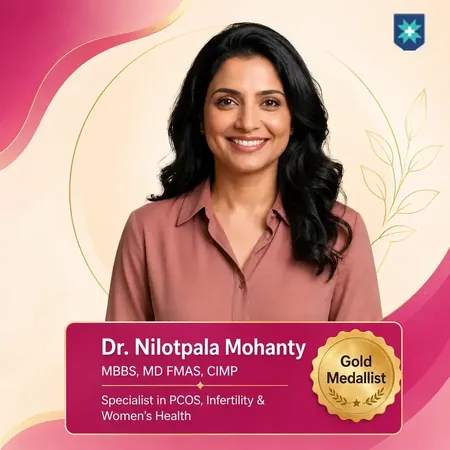
Dr. Nilotpala Mohanty offers personalised PCOS evaluation for adolescents at Genova Clinic, Malviya Nagar. Early diagnosis changes everything.
Treatment of PCOS in Teenagers: A Holistic Approach
FOGSI's guidelines are unambiguous: lifestyle modification is the primary, first-line treatment for adolescent PCOS. Even a 5–10% reduction in body weight can dramatically lower insulin levels, restart ovulation, and reduce androgen excess. No pill replaces this foundation.
1. Nutrition — Eating for Hormonal Balance
- 🌾Choose low-glycaemic index (GI) carbohydrates — millets, oats, brown rice — over white rice, maida, and sugar. Low-GI foods blunt the insulin spike that drives androgen excess.
- 🥗Fill half the plate with non-starchy vegetables at every meal. Cruciferous vegetables (broccoli, cabbage) support oestrogen metabolism.
- 🚫Eliminate sugary drinks, packaged juices, and ultra-processed snacks — the most efficient way to reduce insulin resistance in teenagers.
- 🥚Ensure adequate protein at breakfast; this stabilises blood sugar and reduces mid-day cravings linked to cortisol spikes.
2. Physical Activity — Movement as Medicine
A combination of moderate aerobic activity (30–45 minutes, 5 days per week) with strength training (2–3 days per week) has been shown in clinical studies to improve insulin sensitivity by up to 30% in adolescent girls with PCOS. Exercise does not need to be intense — brisk walking, cycling, swimming, or dance classes all qualify.
3. Sleep & Stress Management
This is the intervention most consistently overlooked. Chronic sleep deprivation — common in teenagers with heavy academic schedules — elevates cortisol, worsens insulin resistance, and amplifies androgen production. Teenagers need 8–9 hours of sleep per night. Stress management techniques like yoga, breathing exercises, and structured study breaks are not luxuries; they are therapeutic tools.
4. Medical Management — When Lifestyle Alone Isn't Enough
When lifestyle changes are insufficient, a gynaecologist may prescribe targeted medical therapy based on the individual teenager's symptom profile. Options include:
- 💊Hormonal contraceptives (low-dose): To regulate periods and reduce androgen levels.
- 💊Metformin: An insulin-sensitising medication used in teenagers with significant insulin resistance or pre-diabetic markers.
- 💊Anti-androgens: For severe hirsutism or acne unresponsive to topical treatments.
- 🩺Vitamin D & Inositol supplementation: Growing evidence supports their role in improving insulin sensitivity and restoring ovulation in adolescents.
Why Early Treatment Is Non-Negotiable
Untreated PCOS in the teenage years does not simply stay the same — it typically worsens. The downstream consequences of leaving adolescent PCOS unmanaged are well-documented and serious:
- 🩸Type 2 Diabetes: Insulin resistance associated with PCOS significantly increases the risk of developing type 2 diabetes by the late 20s or 30s.
- ❤️Cardiovascular Risk: Elevated androgens and dyslipidaemia increase the long-term risk of heart disease.
- 🤰Fertility Challenges: Chronic anovulation makes conception more difficult, though not impossible. Early management markedly improves reproductive outcomes.
- 😔Mental Health: Untreated PCOS correlates with significantly higher rates of depression and anxiety through young adulthood.
- 🩺Endometrial Risk: Infrequent periods lead to prolonged, unopposed oestrogen exposure — which, over years, can affect the uterine lining.
The evidence is clear: the sooner adolescent PCOS is identified and actively managed, the smaller the burden it places on a woman's long-term health. A consultation today is genuinely an investment in your daughter's future wellbeing.
Get Expert PCOS Care in South Delhi
Dr. Nilotpala Mohanty — Gold Medalist, 27 years' experience — provides compassionate, evidence-based PCOS care for teenagers at Genova Clinic, Malviya Nagar.